Europe has spent the past decade playing defense — more of a spectator than a protagonist on the global stage. It reacts to Washington, it reacts to Beijing, it reacts to Moscow. In doing so, it has slowly lost the habit — and the ability — to act autonomously.
Now, for the first time in years, the continent seems ready to shift gears. A flicker of strategic initiative is emerging. But that shift brings with it a question as basic as it is urgent: Where does Europe actually want to go?
Mark Carney’s speech at Davos marked a symbolic turning point. When he declared openly that the rules-based world order was fading beyond recovery, he merely gave official voice to what much of the world outside the G7, NATO, and the stewards of the old liberal consensus already believed: the order is not eroding — it’s over.
This collapse was not sudden. It came slowly, in layers, through wounds that never healed.
The international order rested on three core pillars. First, a structural pillar: a complex of institutions built by the postwar powers to manage global stability and shared interests — the UN, IMF, WTO, NATO, the EU. Second, a normative one: the idea that major powers would not attack one another, commercially or territorially, and would respect sovereign boundaries. And third — the most fragile yet most powerful — an ideological pillar: the belief that the system wasn’t just about managing power, but also about defending universal values — human rights, democracy, individual liberty.
That ideological narrative began to fray with the “war on terror.” The very states that claimed to uphold international law systematically violated it — through unauthorized invasions, secret prisons, extrajudicial drone strikes. Still, the moral justification held: this was about protecting the world from terrorism. That was the first major crack in the myth.
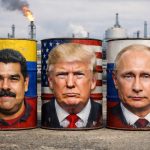
The true rupture came when the hegemon — the United States — stopped pretending to uphold the system and began actively dismantling it. Donald Trump’s contempt for European allies, his trade wars, and even his offhand suggestion of buying Greenland, all pointed to a new paradigm: no more disguised dominance — just raw power. The rules were no longer bent to preserve the system, but broken to replace it.
Today, as Europe sifts through the rubble of the old order, it is urgently seeking new partners to rebuild a sense of strategic autonomy. India has emerged as a key player in this equation. Not because it shares Europe’s values, but because it offers what Europe lacks: room to maneuver.
The EU-India defense and security agreement — along with an ongoing trade pact — aims to carve out a “third way” between the gravitational pulls of Washington and Beijing. The partnership spans maritime security, non-proliferation, space cooperation, and counterterrorism. Crucially, it includes joint industrial projects in the defense sector, in line with India’s desire to reduce its historic dependence on Russia.
Indeed, India has long been one of Russia’s largest arms buyers. Between 2010 and 2014, 72% of India’s defense imports came from Moscow. By 2020–2024, that number had fallen to 36%. France and the U.S. now hold a third of that market. In the energy sector, a similar pattern is unfolding: sanctions on Russia have pushed India to scale back purchases from companies like Lukoil and Rosneft.
Europe wants to fill that gap — not just as a supplier, but as a technological and strategic partner. Yet the path is riddled with friction. Concerns linger over sensitive technology transfers, potential leaks to third parties (including Russia), and India’s long-term reliability as a strategic ally.
India, for its part, does not mourn the death of the old order. It was never its order to begin with. And that distance allows it to play the global game with unmatched flexibility — pursuing advantage without ideological baggage.
Europe, in contrast, is caught in the classic dilemma of a fading power: it wants to shed its old skin, but is reluctant to let go of the body that carried it for decades.
The question is not what Europe can build on the ruins of the previous system.
The real question is: how much of its past is it willing to leave behind?