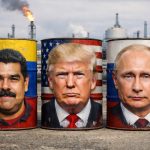

On 4 February 1945, in the Livadia Palace in Crimea, Roosevelt, Churchill and Stalin opened the conference that would shape the post-war order. Roosevelt, visibly frail, would be dead within two months. On 6 February, the talks turned to Poland. The Polish government-in-exile was still in London. No one had invited it. Eighty-one years later, on 19 November, Xi Jinping will host Donald Trump and Vladimir Putin in Shenzhen during the APEC summit, with nuclear arms control and the war with Iran on the agenda. This will not be a new Yalta: then, allies negotiated against a common enemy; today, rivals take their seats. Yet the question Livadia left behind is back on the table: the capacity to negotiate is not the legitimacy to decide on behalf of those who are absent.
Nor are these three all-powerful men. Putin arrives three days after Ukrainian drones struck the Kerch Bridge, on the very peninsula where Yalta was held; with the damage still unassessed, the artery of the annexation has proved vulnerable. Trump arrives after elections that gave the Democrats a majority of seats in both chambers, which hold the purse strings, shape sanctions and, in the Senate’s case, ratify treaties. Xi has seen the two highest-ranking generals of his military leadership placed under investigation this year, while the resignation of Jensen Huang as head of Nvidia, over his relationship with an executive whom Washington links to Chinese intelligence, is fuelling pressure to restrict chip exports. None of this has been proven, but all of it weighs.
That is why the setting matters. Yalta was military geography. Shenzhen is the geography of supply chains and semiconductors. Power is no longer measured only by the territory one controls, but by the networks on which others depend. And this is where the absent appear. Europe, whose security is at stake in Ukraine, will have no seat. Nor will Ukraine, although the Kremlin says its war will be discussed between Putin and Trump; sovereignty cannot be a variable in someone else’s conversation. Taiwan will be present without being there, in every sentence about chips. Africa and the middle powers may watch rules and risks that affect them being set without ever having been part of the discussion.
From both shores of the Strait of Gibraltar, I have learned that geographical proximity does not guarantee political understanding. Fourteen kilometres separate Europe from Africa, and yet each shore often decides for the other without listening to it. The distance that weighs most is the one between those who decide and those who bear the consequences. How, then, can we tell a diplomatic photo opportunity from real progress? By three tests: verifiable commitments, the capacity to implement them, and the participation of those affected.
At Livadia, an order was drawn that lasted for decades, and grievances were sown that Poland would carry for more than forty years. That the great powers talk is necessary; to fear it would be naïve. But stability can be negotiated among the few. The legitimacy of peace requires listening to many more.