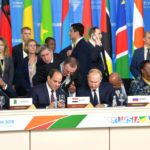

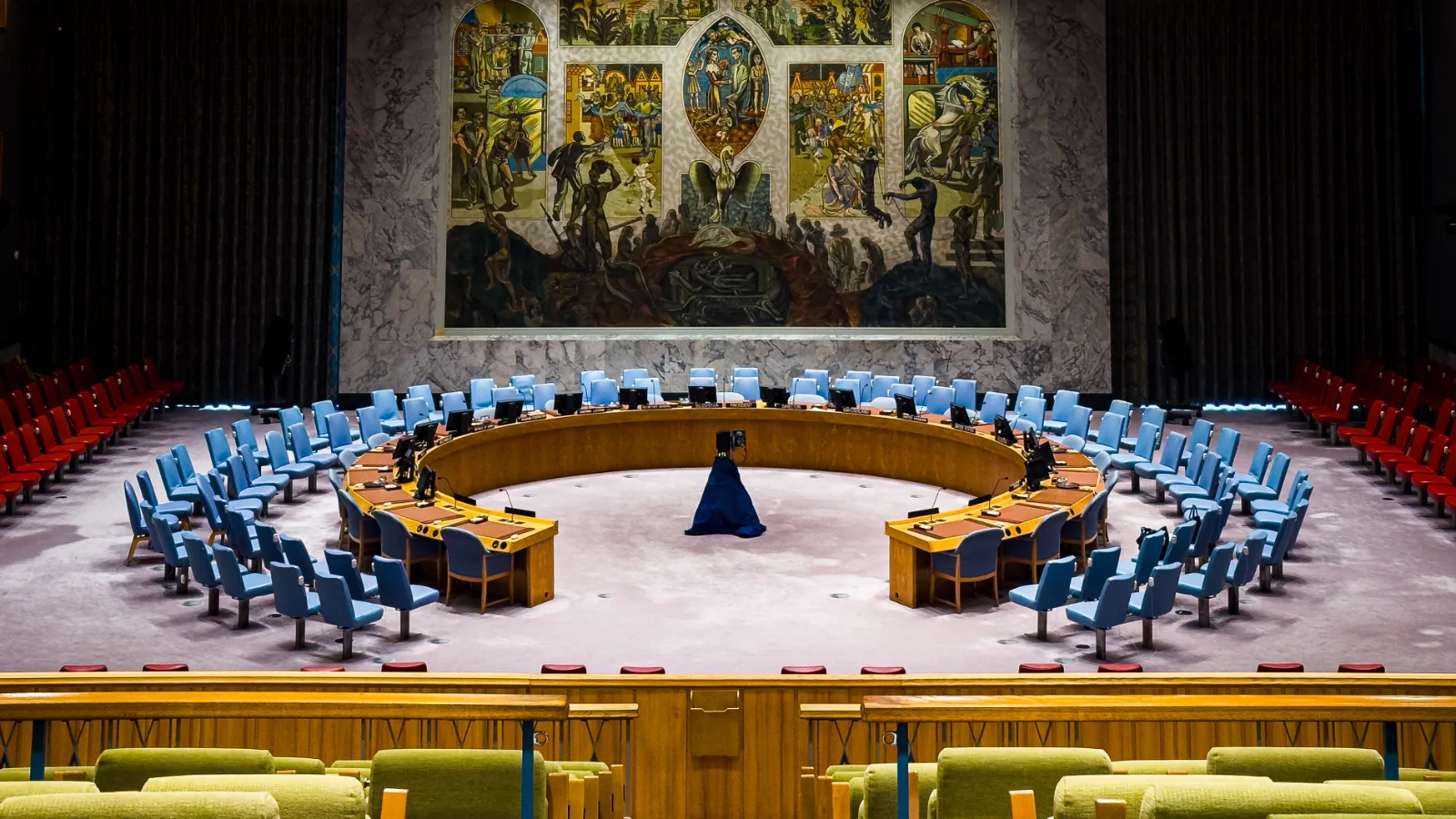
Some silences weigh more than speeches. The one on 30 October, in the Security Council, lasted only a few seconds: the time it took for a hand to rise. Eleven of the fifteen members had just backed the American text renewing MINURSO and steering it, at last, towards Moroccan autonomy as the basis for a settlement. China, Pakistan and Somalia abstained. Russia said no. And in that chamber, a single no outweighs eleven yeses.
The Russian delegate spoke of a veto that saved lives. Minutes later he tabled his own text: a technical rollover, as if nothing had changed in thirty-five years. Washington voted against it, an almost symbolic gesture: the Russian draft persuaded only three members. Eleven abstained.
At midnight on 31 October, the mission created in 1991 to organise a referendum that never took place ceased to exist. It was Unity Day, the holiday Morocco established to commemorate the previous year’s vote. In Laayoune, the streets were already lit. Moscow had set out to stop Rabat and handed it the perfect date.
Chess players call it a gambit: sacrificing a piece to win a position. What is remarkable about this game is that the sacrifice was not made by the side that wins. Rabat did not need to move a single pawn. It relied on what it has practised for two decades: patience and accumulation. Washington, Paris, Madrid and London now back the autonomy plan. The veto did not undo that majority; it merely denied it, for now, a signature.
But the game did not end in New York. Five days earlier, Algeria’s parliament had unanimously approved something it had not done since 1973: sending troops abroad. Destination: Madama, in northern Niger, a former French base on the threshold of Libya. Official mission: to protect Sonatrach’s oil wells. Barely eighteen months ago, Niamey recalled its ambassador from Algiers. Today it welcomes Algerian soldiers. In the Sahel, enmities expire before contracts do.
Niger is also Africa Corps territory, the military arm through which Moscow stepped into the space vacated by the French and the Americans. Yet that promise of protection looks worn. In April, its men left Kidal, in Mali, escorted by the very rebels they were meant to fight. No empire can watch every desert at once.
Here one must tread carefully. There is no proof that Algerian soldiers have come to relieve the Russians, nor of any pact between the two capitals. But the pattern is hard to ignore: a junta living under Moscow’s umbrella now enjoys the support of Africa’s largest military budget, equipped with Russian aircraft, just as its original protector falters.
If the hypothesis holds, the board borders on irony. Russia, defending Algeria’s position, would have hastened the outcome Morocco celebrates. Algeria, defending its wells, would be propping up Russia’s wager in the Sahel. And the United States, by rejecting the Russian rollover, would have completed a move that was never its own. Each believed it was playing its own pieces. Perhaps all of them, unknowingly, were playing someone else’s.
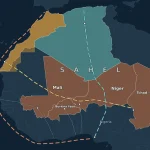
While Algiers exports soldiers to guard what it already has, Rabat offers those same landlocked countries something no army can give them: access to the ocean. The Atlantic Initiative, launched in 2023 and reaffirmed in 2025 before the foreign ministers of Mali, Burkina Faso and Niger, binds roads, corridors and the future port of Dakhla into a single route. Without MINURSO, it ceases to be one offer among many and begins to look like the only architecture available. For a truck driver in Agadez, this is not geopolitics: it is the price of rice, the medicine that arrives in time, the son who need not cross the desert in search of a future.
The Maghreb and the Sahel were never two boards, but one, stretching from the Atlantic to Lake Chad. The great powers still believe that winning means blocking squares. But in the desert, alliances shift like dunes. Only the paths that lead to the sea withstand the wind. Whoever draws them will not win a vote; they will win an era. Vetoes are written in sand. Routes, on the map.