
The New Geopolitics of the Straits
The crisis in the Strait of Hormuz has brought the international system face to face with an old lesson that globalisation once appeared to have consigned to history: geography still matters. When a maritime passage only a few dozen kilometres wide can unsettle energy markets, drive up shipping insurance premiums and compel major powers to recalibrate their strategic calculations, it becomes clear that international power does not reside solely in military capabilities, technological superiority or economic weight. It also lies in those critical spaces through which the world must continue to flow.
Yet perhaps the most consequential lesson of Hormuz is to be found thousands of kilometres away, at another maritime gateway: the Strait of Gibraltar.
To compare the two is not to suggest that they are equivalent. Hormuz is one of the world’s most consequential energy chokepoints, situated at the heart of a region characterised by persistent military and geopolitical tension. Gibraltar belongs to a markedly different strategic environment. What they share, however, is the capacity to translate geography into power.
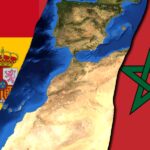
For too long, Europe has tended to view Gibraltar primarily through the prism of the Rock itself and the historical dispute over sovereignty. From a geopolitical perspective, however, the relevant strategic space is considerably broader. Rota, Cádiz, Algeciras, Gibraltar, Ceuta, Tanger Med and northern Morocco together constitute a strategic arc located at the intersection of four geopolitical spaces: the Atlantic, the Mediterranean, Europe and Africa.
Formidable capabilities are emerging on both shores. Tanger Med has established itself as one of the world’s major logistics platforms, while Algeciras remains among Europe’s leading ports. At the same time, the economic relationship between Spain and Morocco has evolved from a merely bilateral commercial partnership into one of structural interdependence. Spain is Morocco’s foremost trading partner, and the productive and logistical chains linking the two economies are becoming increasingly integrated.
It would therefore be strategically shortsighted to interpret Algeciras and Tanger Med exclusively through the logic of competition. They will inevitably compete for investment, shipping routes and container traffic, but geopolitically they form part of the same ecosystem. The decisive question is no longer which shore handles the greater volume of goods, but rather how much strategic and economic value both shores can generate from the flows passing through the Strait.
This is where a new strategic vision should begin.
Spain and Morocco could promote a Strategic Community of the Strait, conceived not as another bureaucratic institution but as an operational framework centred on five critical domains: maritime security, the protection of critical infrastructure, energy interconnection, digital connectivity and coordinated responses to emergencies and hybrid threats.
Its guiding principle might be formulated as a Doctrine of the Open Strait: the recognition that no political, military, technological or energy crisis should be allowed to jeopardise the essential flows connecting Europe and Africa.
The nature of the threat itself has changed. The next maritime confrontation may not begin with a warship. It could start with the sabotage of a submarine cable, a cyberattack on a port, interference with satellite navigation systems or the paralysis of a critical energy facility. The strategic value of a strait in the twenty-first century therefore lies not merely in controlling maritime passage, but in protecting the complex architecture of connectivity that surrounds it.
This has profound implications for Europe.
The European debate increasingly invokes the concept of strategic autonomy, yet continues to interpret it predominantly through the prism of military capability. Such an approach is necessary, but insufficient. Genuine strategic autonomy also requires resilient ports, diversified energy supplies, secure digital infrastructure, alternative trade corridors and alliances capable of enduring the turbulence of an increasingly fragmented international order.
From this perspective, Morocco assumes a different significance for Europe: not merely as a southern neighbour, commercial partner or interlocutor on migration, but as a potential component of a broader Euro-African architecture of security, connectivity and prosperity.
This must not, however, evolve into a strategy directed against Algeria. Spain requires both a deep strategic partnership with Rabat and a stable, substantive relationship with Algiers. A mature foreign policy should not unnecessarily choose between the two principal powers of the Maghreb; rather, it should seek to prevent their rivalry from constraining Spanish and European strategic interests.
The 2030 FIFA World Cup offers an exceptional opportunity to accelerate this vision. Spain, Portugal and Morocco could transform a global sporting event into the catalyst for a strategic Lisbon–Madrid–Andalusia–Tangier–Casablanca corridor, ultimately extending towards West Africa. Transport, energy, digitalisation, security, logistics and mobility could constitute a legacy far more consequential than the stadiums themselves.
For centuries, Gibraltar symbolised the frontier between Europe and Africa. The twenty-first century offers the possibility of transforming it into precisely the opposite: their principal geopolitical hinge.
Europe speaks increasingly of strategic autonomy, yet still conceives it too narrowly in military terms. In a fragmented international order, effective sovereignty also depends upon resilient ports, energy security, protected digital infrastructure, alternative commercial corridors and durable alliances. Globalisation did not abolish geography; it reaffirmed its strategic centrality.
Herein lies the distinction between two straits and two conceptions of power. Hormuz embodies the coercive capacity to interrupt global flows; Gibraltar holds the opportunity to guarantee their continuity.
For the most sophisticated form of power in the twenty-first century may ultimately reside not in the ability to close a passage, but in becoming indispensable to keeping it open.