
Morocco has modernised, expanded its international influence and become a partner Spain increasingly needs. Yet part of Spanish public opinion continues to view the country through old prejudices, even as strategic reality makes its importance impossible to ignore.
Two recent scenes capture this contradiction. After Spain’s victory in the 2026 World Cup, thousands of people celebrated in Tangier, Tetouan and other Moroccan cities. Spanish flags filled the streets, supporters wore the national team’s colours, and the celebrations revealed how deeply Spain remains embedded in the cultural and emotional imagination of northern Morocco. Yet those images received remarkably little attention in the Spanish media.
Soon afterwards, wildfires affecting Madrid and Ávila forced the authorities to mobilise national and European resources. Spain requested assistance from its European Union partners, while Morocco — which possesses significant aerial firefighting capabilities and has supported Portugal on several occasions — remained largely absent from the public discussion.
This is not to suggest that Rabat formally offered assistance and Madrid rejected it. Nor should a national emergency be reduced to a diplomatic accusation. The issue runs deeper. Spain cooperates closely with Morocco on migration, security, trade, counterterrorism, transport and energy, yet it still struggles to recognise the country as a strategic partner in its own right.
The relationship remains trapped in a double standard. When Morocco is needed, the language is one of “cooperation”. When Rabat defends its own interests, suspicion quickly returns, together with a vocabulary that portrays the country as a threat. This ambivalence reflects a mindset that has not fully understood that the nation south of the Strait is no longer the Morocco of thirty years ago.
Tangier Med, the automotive industry, renewable energy, African diplomacy, modern infrastructure, military development and expanding logistical capabilities all point to a state project pursued with remarkable continuity. As Abdelmalek Alaoui has written, Morocco has made “sovereignty its compass, stability its method and projection its horizon”.
The monarchy has been central to that continuity. As Morocco marks the twenty-seventh anniversary of the Throne Day, it is difficult to deny that Mohammed VI has overseen a profound transformation of the country. While many governments operate within four-year electoral cycles, Morocco has developed strategies designed for horizons of twenty or thirty years.
Yet external modernisation must not conceal internal fragilities. Youth unemployment, territorial inequality, water scarcity, rural precarity and the uneven distribution of growth remain serious challenges. A country may build ports capable of handling millions of containers while still leaving many young people without a credible path towards opportunity.
That is Morocco’s real challenge: to turn capacity into prosperity, sovereignty into public trust and growth into social mobility. Spain’s challenge is different. It must learn to deal with Morocco as it exists today, rather than with the country inherited from colonial nostalgia, political fear and domestic argument.
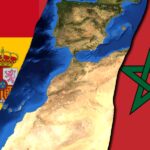
Spain is not required to accept every Moroccan position. A mature relationship must allow for disagreement over Western Sahara, Ceuta, Melilla, migration, agriculture and territorial waters. But disagreement does not require contempt, just as cooperation does not imply submission.
Geography leaves little room for indifference. It demands trust, permanent mechanisms of cooperation and a shared strategic vision for the western Mediterranean.
The Strait of Gibraltar is only a few kilometres wide. Political distance, however, is built every day through language, silence and prejudice. Spain’s greatest risk may not be that Morocco becomes too powerful, but that it discovers too late that its southern neighbour had been gaining strength for years while Spain continued to look the other way.